
Crossroads Community Ministries: Arrange the Volunteer Role |
Explore Crossroads Community Ministries volunteering in Atlanta. Confirm the role, orientation and commitment before recruiting a church team. |
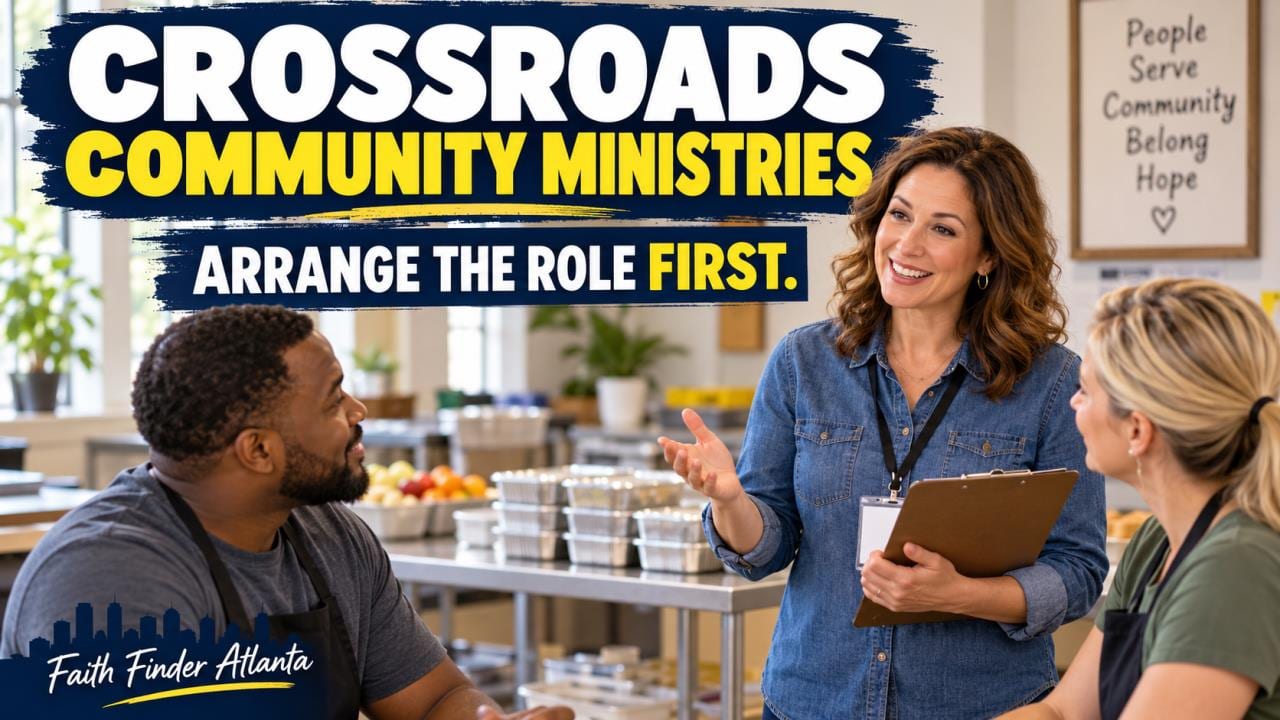
A church group considering Crossroads Community Ministries should begin with the role, not a large invitation. The Atlanta nonprofit supports neighbors facing homelessness through several programs, and a meal-service opportunity is different from a recurring hospitality assignment. Let the organization define the useful commitment before the congregation fills a roster.
The official Crossroads program overview describes the Renewal Project, Door-to-Door Housing, Clyde's Kitchen and the Partner Hub. Together, these address different parts of a person's route toward stability. Public program hours describe service operations; they do not automatically identify volunteer arrival times or available group openings.
The faith-community connection is well established. St. Luke's community-ministry history explains that Crossroads grew from volunteer-led outreach at the Episcopal church and now operates as an independent nonprofit. A congregation can honor that relationship by listening to the current organization rather than assuming old practices still govern today's work.
Name one coordinator and describe the proposed team's actual capacity. Ask which current role fits its size, ages and availability, whether recurring service is needed and what training applies. Keep the date tentative until Crossroads confirms the opportunity; willingness to help is not the same as a scheduled assignment. |
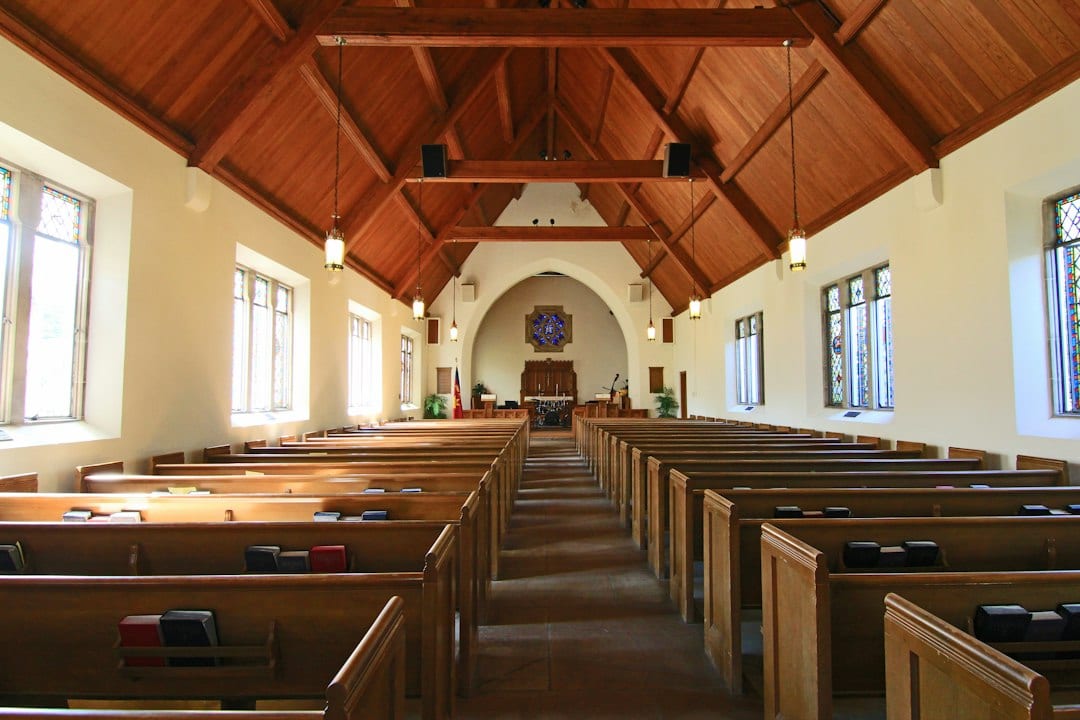 Photo by Debby Hudson on Unsplash — Illustrative church photograph; not St. Luke's Episcopal Church or Crossroads. |
Distinguish a recurring role from a service dayA Courtyard Navigator opportunity posted by Crossroads describes guest-facing hospitality and asks for a consistent weekly commitment. The posting specifies an application followed by staff contact about orientation and scheduling. Treat those steps as part of that particular opportunity, rather than advertising it as a drop-in shift for any group.
If the church can offer only a single day, say so at the start. Ask the staff whether another opening fits, and be willing to hear that the proposed date or group size does not. Reliable service begins with a realistic match, not pressure to turn every ministry gathering into an on-site event.
Confirm the actual check-in point and instructions after the role is arranged. The official website displays a post-office box, which is a mailing address rather than a volunteer arrival destination. Do not send a group to an address copied from a footer without a confirmed handoff.
Ask what work the role includes and what it does not. Hospitality volunteers should not improvise eligibility decisions, financial promises or case-management advice. Refer questions outside the assignment to staff, and keep personal information or documents within the organization's approved procedures. |
 Photo by Julia M Cameron on Pexels — Illustrative community food-service photograph; not Crossroads, its volunteers or its guests. |
Put dignity into the team briefingBefore the visit, explain the confirmed task, arrival window, clothing guidance and coordinator contact. Ask about any individual accommodation needs privately and early. Do not assume one person's previous experience establishes the requirements for another person or a different role.
For guest-facing service, respectful conversation and dependable follow-through matter more than collecting photographs. Agree that no participant will use neighbors' stories, images or circumstances in a church presentation without the organization's appropriate permission process. A service reflection can focus on what volunteers learned without exposing someone else's life.
For a separate family-oriented opportunity, compare our Atlanta Mission age-fit volunteering guide. Our MUST Ministries group-planning guide offers another partner to consider. Those organizations have their own requirements and should not be treated as interchangeable bookings.
After the first commitment, ask Crossroads whether the arrangement was useful and whether the team can sustain the work requested. Record the next agreed step rather than assuming a repeat date. A small, consistent partnership can serve neighbors well when the congregation's enthusiasm follows the organization's actual needs. |
0 Comments
Join the conversation
Be the first to comment
Share your thoughts above.