
FODAC Donations: Confirm Equipment Before a Church Collection |
Plan FODAC donations around accepted equipment, current supply rules and a confirmed handoff. Coordinate a church collection before inviting donors. |
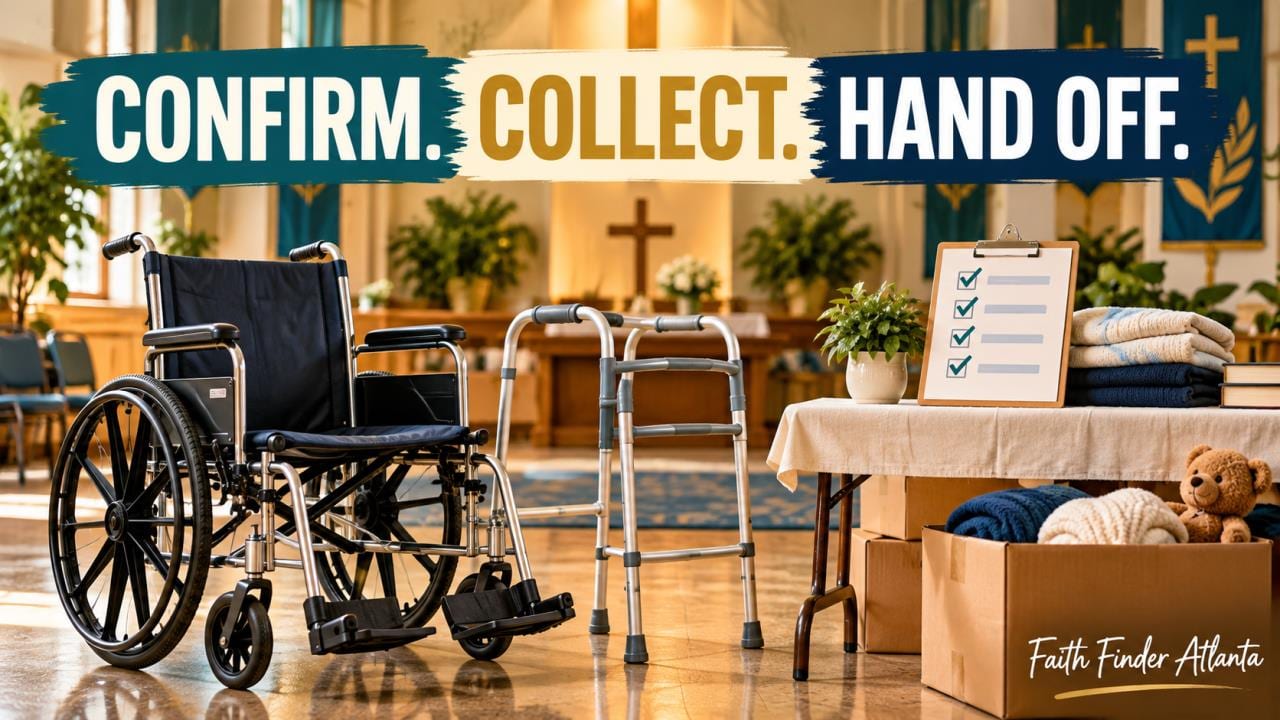
A church collection for FODAC donations can turn unused equipment into practical community support, but the receiving plan should come before the announcement. Confirm what the organization can accept and how the items will reach it before inviting households to clear a garage.
FODAC’s medical-donation page lists home equipment such as wheelchairs, walkers and shower chairs. For medical supplies, it specifies expiration dates at least 15 months beyond donation and excludes medications, dialysis items and fluids. Read the current criteria rather than treating every health-related item as suitable.
Begin with a narrow, clearly described collection. Ask donors for the item’s type, condition and relevant details before transport is arranged. Do not promise acceptance on FODAC’s behalf or encourage people to leave unidentified items at the church without coordination.
A focused drive is easier to manage than an open-ended request for anything useful. Decide who reviews incoming offers, who answers questions and where confirmed items will wait until the handoff. Keep the plan small enough for the volunteers actually available. Arrange the receiving route before announcing a date |
 Illustrative stock photograph of a wheelchair; not FODAC inventory or equipment confirmed for donation. Photo by Junseong Lee on Unsplash |
The organization’s equipment-drive page welcomes inquiries from individuals, groups and businesses. It lists 770-491-9014 extension 133 as the contact for hosting a drive or drop-off site. Use that route to discuss a church collection rather than inventing a new public collection point.
Confirm the proposed scope, timing and receiving arrangements directly. Ask which items are most useful for the current drive, how uncertain offers should be handled and what information volunteers need at intake. Save the response so everyone works from the same instructions.
FODAC asks donors to call partner drop-off sites ahead. Its medical-donation page also describes pickup as an option to request, not an automatic service. A church announcement should not promise that every large item will be collected from the donor’s home.
For a different hands-on service model, our MedShare supply-sorting team guide explains a separately arranged volunteer visit. Sorting supplies at an organization and collecting equipment at church are different commitments; select the one that matches the team’s capacity.
Give donors a specific contact for questions before collection day. A brief conversation about an uncertain item can prevent an unsuitable load and spare volunteers an avoidable storage problem. Keep acceptance decisions with the receiving organization. Make the handoff manageable for donors and volunteers |
 Illustrative stock photograph of an older adult with a mobility aid; not a FODAC client, donor or church-drive participant. Photo by Rollz International on Pexels |
Use FODAC’s frequently asked questions to distinguish equipment services, donation-dock operations and thrift-store activity. Those functions have different published hours. Confirm the actual receiving window for the load instead of assuming that one set of opening hours covers everything.
Keep nonmedical donations separate. Our SVdP Georgia clothing-donation guide covers another receiving route with its own rules. A mixed church collection should not become one unsorted delivery simply because several organizations accept some donated goods.
Before moving a bulky item, confirm the practical loading and unloading arrangements with the people involved. Volunteers should not improvise repairs or describe equipment as ready for someone else to use. The receiving organization’s process determines how donated items are evaluated.
Share the agreed deadline and handoff instructions plainly. If an offer falls outside the confirmed plan, pause it for clarification rather than enlarging the drive by default. A modest collection delivered as arranged is more useful than a large pile with no receiving appointment.
Afterward, thank participants without sharing former users’ private stories or identifying information. Record what the team learned about communication, transport and the receiving process. That gives the next collection a stronger starting point while keeping the focus on reliable service. |
0 Comments
Join the conversation
Be the first to comment
Share your thoughts above.